


A Taste for [Systemic] Change: From Food Banks to Community Power
October 22, 2026
By Rajesh Makwana, BEM - Executive Director at Sufra
© Trussell images
How do we meaningfully reduce food insecurity in our communities? Here’s a quick multiple choice – do we:
A) Scale up community food aid? Yes – ensuring everyone can access food aid when they need it is vital right now, with destitution on the rise. But do we really want to scale up community-driven infrastructure that ultimately absolves governments of their responsibility to meet the Right to Food?
B) Fix Universal Credit and increase incomes for all? Yes, it is a no-brainer. Income from work and/or benefits should be enough to pay for the essentials. But what happens when those increases are immediately swallowed by uncontrollable rises in the cost of housing and energy, and levels of relative poverty and inequality continue to rise?
C) Reverse the concentration of wealth and power? Redesign our economic system to avoid extremes of both wealth and poverty, ensuring nobody goes without? Yes – this is the ultimate solution if we don’t want to be constantly swimming against the tide. But how on earth do we mobilise the political will needed to make this a priority for our government(s)?
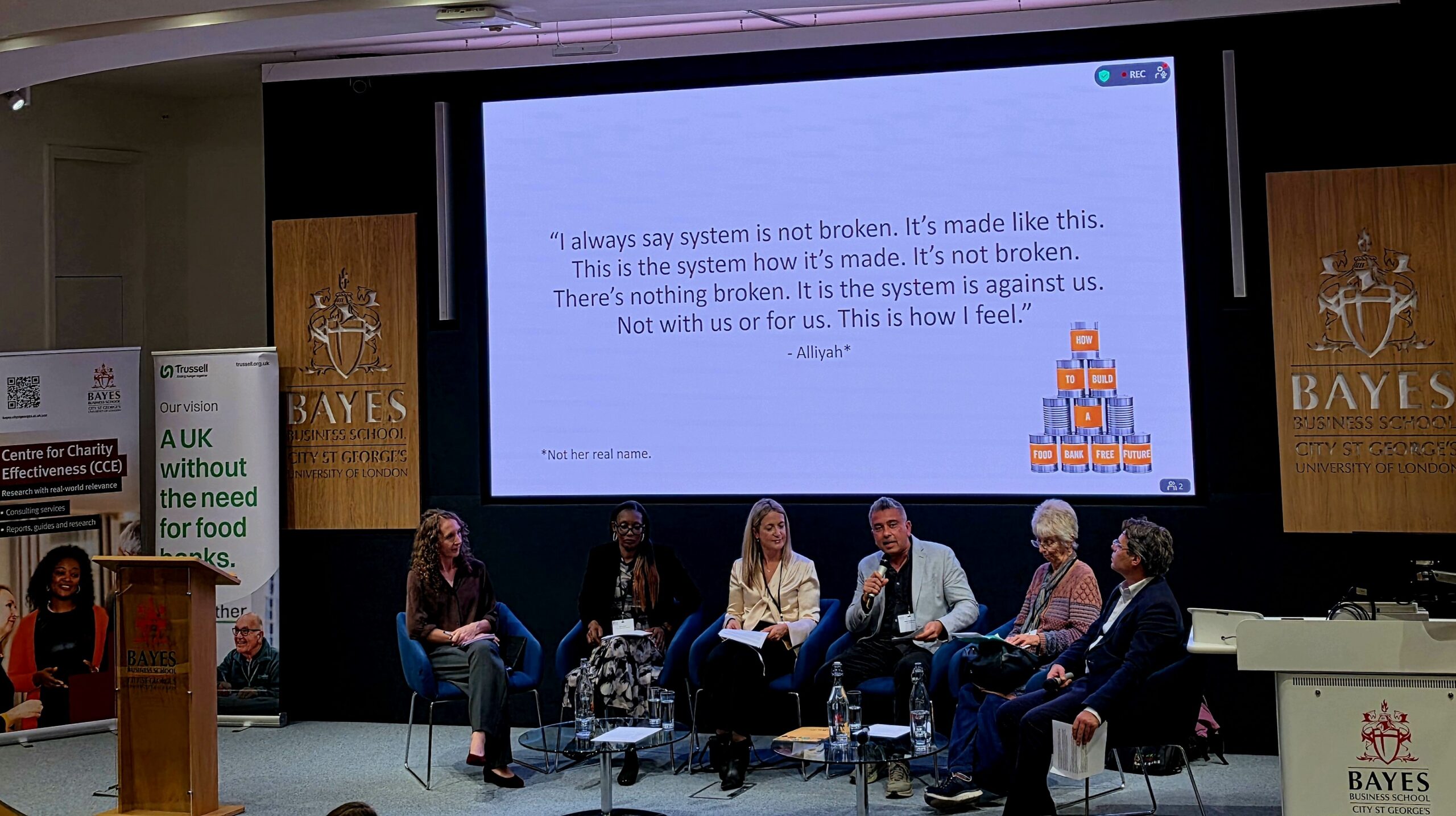
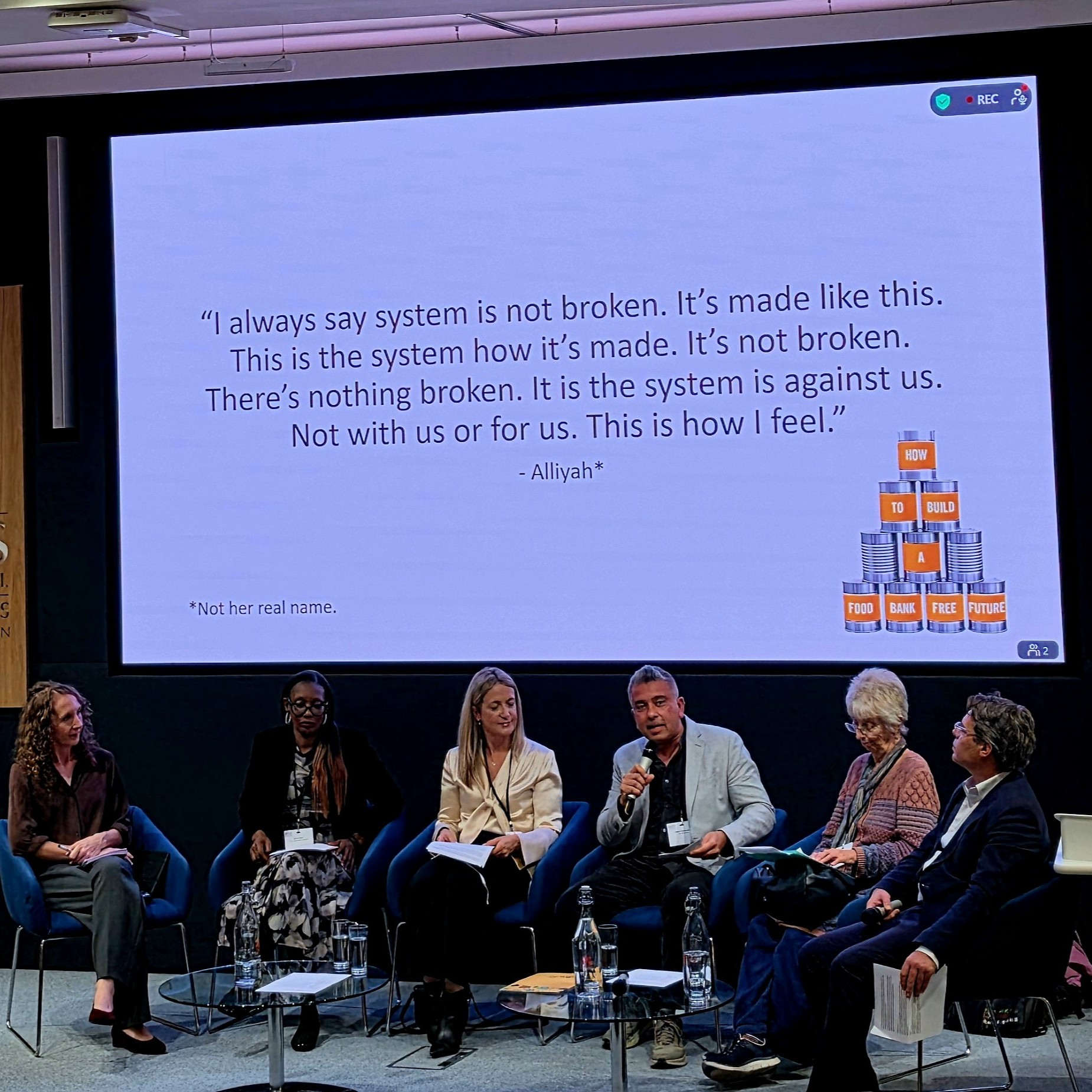
These questions were at the forefront of my mind when I recently sat on the panel for the launch of Heather Buckingham’s excellent new book, A Taste for Change: How to Build a Food Bank Free Future.
The book is an essential, compassionate and meticulously researched analysis of a bleak trajectory: despite the tireless work of the sector, the crisis is deepening – it’s now pulling middle-income households into poverty. It sets out the immediate policy interventions we desperately need.
But when I was invited to give my introductory remarks for the panel, I wanted to take a step back. I argued that to truly address this crisis, we must look beyond food banks, and even beyond food poverty itself. Here is what I shared with the room:
Wealth, Power and Inequality
The real issue we are facing is a growing level of poverty driven by the increasing concentration of wealth and political power in the hands of a rapidly shrinking minority. This is not just a UK issue but a concern in countries across the world; it’s a global trend that speaks to the architecture of our economic systems.
Moreover, this dynamic is entirely self-perpetuating. As the ultra-wealthy accumulate more income, they need to invest it. That means investing in assets such as property, which artificially inflates market values, drives up rents and prices ordinary people out of the market. Unaffordable rent is a primary driver of food poverty today, and it is exactly this dynamic that is dragging middle-income families into financial struggle.
Crucially, as wealth concentrates, so does political power. The voices of those impacted by poverty are drowned out, ensuring that policies are shaped predominantly by those with money, power and influence. The result is the paradox we see today: there are more rich people and more wealth than ever before, and yet an increasing proportion of the population is struggling to make ends meet. Central government, local authorities, public services (healthcare, education, social services etc.) and the charity sector are all being progressively decimated by a lack of funding.
We can’t afford to ignore this. And it’s the ultimate false economy: reducing the cost of critical social safety nets only serves to transfer these costs downstream onto already overburdened and under-resourced communities – not to mention the NHS and crisis prevention services.
Blueprints for Systemic Change
During my talk, I acknowledged the elephant in the room – which earned a chuckle from the audience. I pointed out that it takes months, if not years, of exhausting campaigning just to win a relatively simple, progressive policy change (such as the campaign to end the two-child benefit limit), and for every win, many campaigns fail. So, to sit on a panel and call for the reform of the global economic system sounds like an impossibly tall order!
But if we don't address this trend, we will be continually swimming against the tide. All our local interventions will be undone by macroeconomic forces.
The good news is that we do not need to reinvent the wheel. The policy solutions required to create a more equal and sustainable world already exist. Many of them have been around for decades. We can look to the work of Olivier De Schutter, the UN Special Rapporteur on Extreme Poverty, and his report on "Eradicating Poverty Beyond Growth"; the International Panel on Inequality spearheaded by Nobel laureate Joseph Stiglitz; or Kate Raworth’s Doughnut Economics. We can also draw on proposals from within the post-growth, commons and environmental movements – to name but a few options.
On a national level, we can look to the Right to Food UK Commission's newly launched roadmap to legally embed household affordability at the heart of government.
The blueprints are all out there…
The Missing Link: Community Power
The real tragedy is that while knowledge of these systemic solutions exists in academic circles and in conference rooms like the one we were sitting in, it does not exist sufficiently in communities where people are most impacted by growing levels of poverty and inequality.
For big structural policy changes to gain traction, they need massive public support. That requires bridging this gap.
This is our real opportunity. The sector must move beyond simply providing emergency aid and begin investing heavily in connecting with the communities impacted and engaging them in these discussions. We need to take these conversations out of the policy bubbles and into the community spaces with the people directly affected by these issues.
I know from our work at Sufra that there is a deep appetite for this – not only among our staff and volunteers, but among our guests (service-users) too. People in our communities want opportunities to understand the causes of their struggles, come together, and get involved in influencing decision makers. Why wouldn’t they?
As a sector, we must recognise that we can and must do much more to help facilitate that – to help communities to organise and mobilise power so that the people most impacted have more influence over the policies that create the challenges they face.
About the Book & The Launch Event
My reflections above were sparked by my introductory remarks on the cross-sector panel for the launch of A Taste for Change: How to Build a Food Bank Free Future by Heather Buckingham.
The launch event took place in October 2026 and was hosted by Bayes Business School’s Centre for Charity Effectiveness in partnership with the Trussell Trust.
I highly recommend picking up a copy of the book. You can order it directly from the publisher, Policy Press, or visit the Trussell Trust website to get the book alongside some excellent free discussion guides designed to help start these vital conversations in your own community.
Latest News

A Taste for [Systemic] Change: From Food Banks to Community Power
Our Executive Director's reflections on speaking at the cross-sector panel for the launch of A Taste for Change: How to Build a Food Bank Free Future by Heather Buckingham.
Community Wellbeing Service Impact Report 2025-26
The CWS represents an innovative, tried and tested paradigm shift from crisis management to prevention and stability. While traditional emergency food aid relies on high-cost, short-term...